Scorpions in Attic Scottsdale
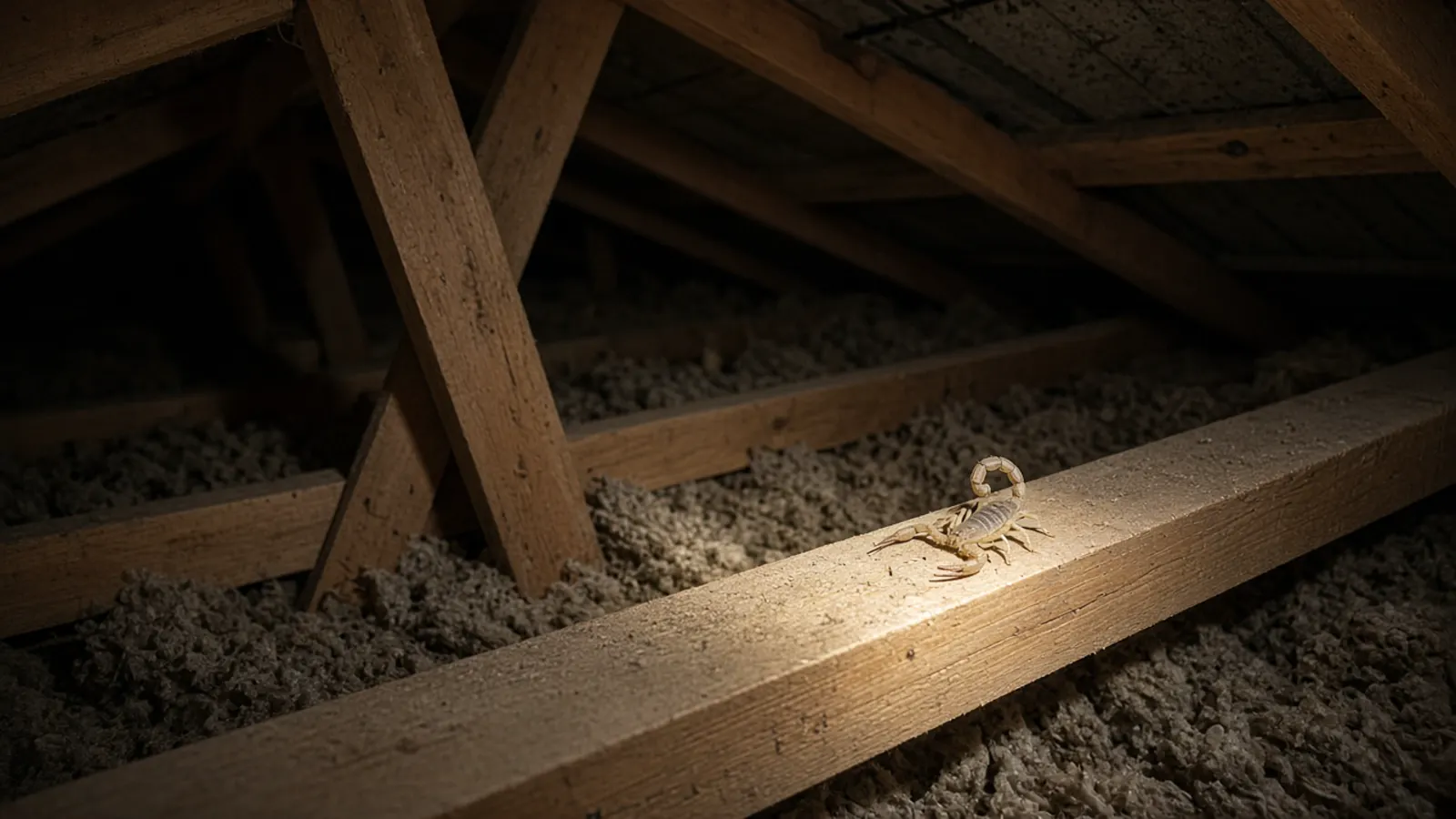
Quick answer: Scorpions in attic Scottsdale homes are usually Arizona bark scorpions that climbed into a wall void, a roof vent or a thin gap, not a colony nesting in the insulation. Close the gaps they use, leave weep screeds free to drain and cut the insects and block-wall hiding spots that draw them to the house. If they keep showing up inside, the void needs a look before you seal over it.
A single scorpion on a rafter is unsettling. It does not mean the insulation is full of them. Bark scorpions hunt at night and rest in tight crevices during the day. An attic is often just the hallway between those crevices. This guide covers why they get up there, the signs that matter, what to do the night you see one and what to seal.
Why Bark Scorpions End Up in Attics and Wall Voids
The Arizona bark scorpion is the species Scottsdale homes deal with. The University of Arizona Cooperative Extension describes it as a crevice animal. By day it tucks into walls, under rocks and into other protected spots, including building wall voids. After dark it comes out to hunt crickets, roaches and other small insects.
That same Extension note summarizes harborage research in which bark scorpions strongly preferred hollow block walls over the other hiding places around a building. A block wall on a Scottsdale lot is a long dark cavity. It stays sheltered, it runs toward the house and it gives a climber a path up to windows, eaves and the roof.
Bark scorpions climb stucco, block and rough wood. From a wall they can reach a soffit gap, an unscreened attic vent, a loose fascia board or an opening where a pipe or cable enters. Once they're in the framing they can move through the void and drop into a room. The Extension notes that they cross ceilings and sometimes fall into sinks, tubs and beds. A scorpion in an upstairs bathroom is often a climber that lost its grip, not proof that the attic is a nest.
Summer attics in the Valley get extremely hot, so in the hottest months bark scorpions more often rest in wall voids, hollow block and shaded clutter than across open insulation at midafternoon. Cooler months are different. They look for stable shelter and a house can be that shelter. Insects from irrigation and door lights are why they stay on the property. The attic is the route, not the reason they picked the house.
Signs That Point to the Attic or the Walls
Scorpions don't leave chewed insulation, droppings or grease marks the way rodents do. If you see that kind of damage, you may have a rodent issue as well and it needs its own fix. Scorpion signs are mostly sightings and the paths that connect them.
- A scorpion on the attic hatch, a rafter or the pull-down stairs
- Repeated finds in upstairs rooms, especially bathrooms and closets on exterior walls
- Scorpions that show up on ceilings or fall into tubs and sinks
- A glow under a UV flashlight along block walls, weep lines, attic vents or the garage at night
- Juveniles, which are smaller and lighter, in the same area more than once
One sighting can be a traveler. The same spot twice means a route. Write down the room, the time and whether it was near a bath, a closet or the attic opening. That note is more useful than a guess.
What to Do When You Find One
- Stay out of a hot attic. Wear closed shoes and gloves, use a flashlight and keep the look short. If the space is baking, leave. Summer attics are a heat risk for people.
- Catch only what you can reach without your hands. A jar and cardboard work. Don't swat a scorpion into a void. If you can't reach it safely, leave it and close the route.
- Check the hatch and the vents. Look for daylight around the attic hatch, torn screens on gable or soffit vents and gaps where pipes enter. A gap about the thickness of a credit card is enough.
- Walk the outside at night with a UV light. Bark scorpions glow. Check block walls, the base of the stucco, the garage and any vent you can see from the ground. Keep your hands out of rock and wood.
- Close the doors and the garage. Sweeps and the garage seal wear out in the sun. Light under a door is a gap a scorpion can use, even when the sighting was upstairs.
- Screen vents and leave weep screeds open. Attic vents need intact screen so air can move. A weep screed lets water out of the stucco. Don't pack it solid. If you can't tell a vent from a weep, leave it.
- Seal pipe and wire openings you can reach. Caulk accessible penetrations and the hatch trim if light shows around it. The University of Arizona Cooperative Extension also suggests caulk at interior pipe collars and electrical faceplates where scorpions exit a void.
- Cut food and hiding spots. Move rock, wood and clutter off the walls. Trim plants off the roof and stucco. Fix irrigation leaks and stop lights from drawing insects to the doors all night.
- Don't seal only the indoor side of an active void. Closing the room while scorpions are still in the wall leaves them there. Have the outside route checked before everything is closed.
Attic and Wall Checklist
- Attic hatch closes tight and you don't see daylight around the frame
- Gable, soffit and roof vents have screen that isn't torn
- Pipe and cable openings in the framing are sealed where you can reach them
- Weep screeds are open enough to drain and not buried in soil or rock
- Door sweeps and the garage seal meet the floor
- Interior pipe collars and loose faceplates on exterior walls are checked
- Block walls and the base of the house have been looked at with a UV light at night
- Wood, rock and clutter sit away from the walls
- Plants and branches don't touch the roof or the stucco
- Outdoor lights aren't pulling insects to the entries
- You wrote down where the scorpion was so a repeat tells you the route
Sealing, Cleanup or a Service Call
Most homes need more than one of these. The table is the difference between them. It doesn't list prices. Those depend on the house and they live on our cost pages, not here.
| Approach | What it does | Good for | Watch out for |
|---|---|---|---|
| Homeowner sealing and cleanup | Closes obvious gaps and removes hiding spots and insect food | A first response after one sighting | Misses gaps you can't see and won't clear a void that's already occupied |
| UV night check | Shows where scorpions travel on walls, vents and the garage | Deciding which side of the house to work on | Doesn't remove them by itself |
| Professional sealing | Closes the routes into the living space after the voids are checked | Repeat indoor finds or a route you can't locate | Seals wear out in the sun and need a later look |
| Treatment of voids and harborage | Reaches block walls and other cavities a surface spray misses | Scorpions already coming out of walls | Works best with sealing and cleanup, not instead of them |
Mistakes That Keep Them Coming
The common mistake is to fog the attic and stop. If the block wall and the door gaps stay open, the next scorpion uses the same climb. Another mistake is plugging every hole you see, including the weep screed, which can trap water in the stucco. A third is treating a bathroom sighting as a plumbing problem. Bark scorpions fall into tubs because the surface is smooth and they can't climb out. The way in was usually a wall, a vent or a door.
A sting can be serious for a child, an older adult or a pet. We don't give medical advice here. If someone is stung and has trouble breathing or severe symptoms, call 911 or poison control.
How This Fits the Rest of the House
Attic finds and garage finds are the same animal using different doors. If you've already been dealing with scorpions downstairs, read what to do when you find a scorpion inside and then come back to the voids and the roofline. Door and window gaps are covered in sealing doors and windows. The full sequence for the yard, the lights and the season is our scorpion prevention guide.
Seeing them more than once? Call (480) 542-0107 and tell us where they showed up. We'll help you sort a one-time climber from a void that's in use.
Frequently Asked Questions
Can bark scorpions live in a Scottsdale attic?
They can travel through attics and wall voids. In the hottest months they more often rest in cooler crevices such as hollow block. A rafter sighting means a route is open. It doesn't mean the insulation is a nest.
Why was there a scorpion in the upstairs tub?
Bark scorpions climb and can cross ceilings. University of Arizona Extension notes that they sometimes fall into sinks and tubs. The smooth surface traps them. The way in is usually a void, a vent or a door gap.
Should I plug weep holes so they can't get in?
Don't pack a weep screed solid. It lets water out of the wall. Screen torn attic vents and seal gaps you've confirmed aren't drainage. If you're unsure which opening is a weep, leave it.
What signs are not scorpions?
Chewed insulation, droppings and grease marks point to rodents, not scorpions. Scorpion clues are sightings, a repeat in the same room and a glow under UV light along walls, vents or the attic hatch.
When should I call someone?
Call if they keep showing up inside, if you can't find the route or if kids or pets spend time on the floor. For a sting with trouble breathing or severe symptoms, call 911 or poison control.