Still Seeing Scorpions After Sealing
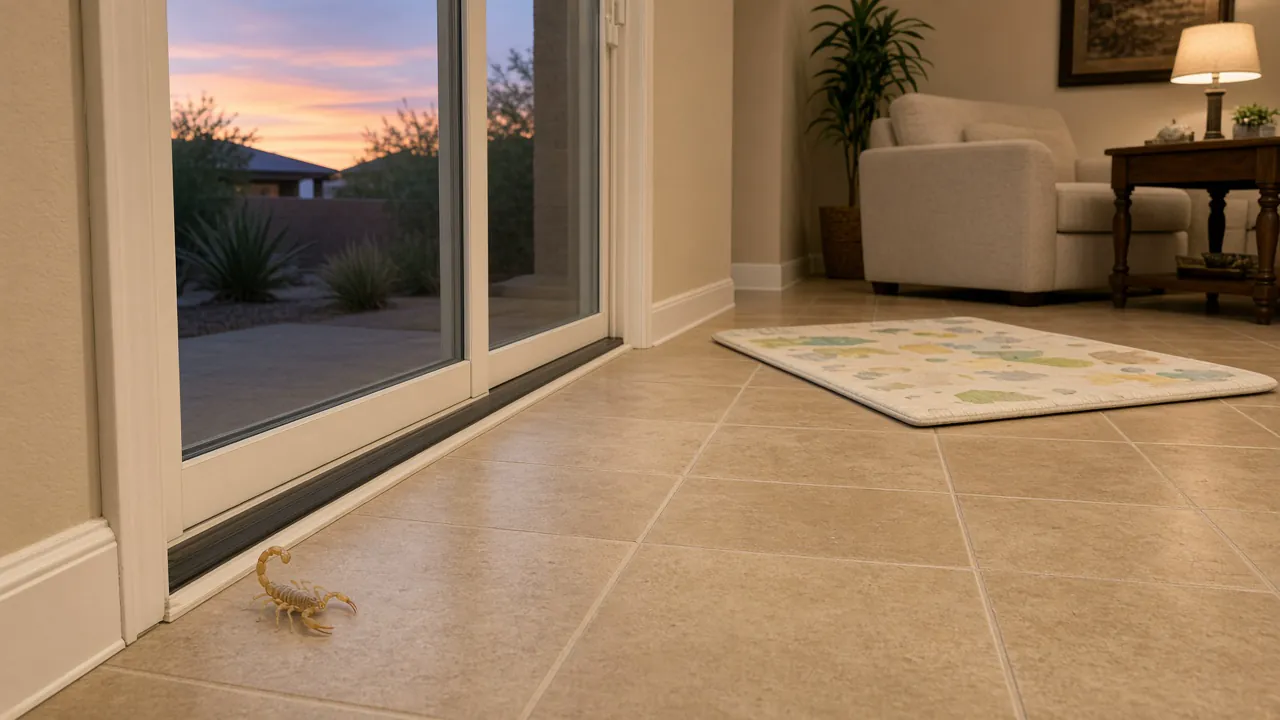
Quick answer: If you are still seeing scorpions after sealing a house in Scottsdale, a gap has reopened, the first pass missed a route or scorpions were already living in a wall, the attic or a block wall. Sealing closes the holes that got caulked. It does not empty a void and the sun dries that work out over a few seasons.
A 2023 seal can still be real work and not be the whole job a few summers later. Bark scorpions fit a credit-card gap, hunt at night and keep living in a block wall when the doors look tight. Use the checks below, including the floor where a baby plays.
Why a Sealed Scottsdale House Still Gets Scorpions
The Arizona bark scorpion is the one Valley homes deal with. University of Arizona Cooperative Extension describes it as a crevice animal that hunts crickets and roaches after dark and rests in walls, under rocks and in wall voids. In harborage studies summarized by that note, about 95 percent preferred hollow block walls over the other hiding spots around a building.
A block perimeter wall is a long cavity that runs toward the house. Sealing the doors does not empty it. The same note says bark scorpions are often found in groups and that they enter under doorways and through weep holes. If the yard still feeds them, the house stays on the route.
Gaps that reopen. Exterior caulk and door sweeps bake in the sun. A sweep that met the slab in 2023 can sit off it now. Light under a door is a gap. Garage seals crack at the corners. A cable tech or a plumber can cut a new hole the original walk never saw. Gravel and mulch creep up and bridge a threshold that used to be clear.
Weep screeds, garage doors and plumbing. A weep screed lets water out of the stucco. Packing it solid traps moisture. A torn or buried weep is still a door. Garage corners are why a "sealed" house often finds them in the garage first. Pipe holes, the hose bib, the water-heater closet and the washer box are the same idea: foam that has shrunk.
Attic and block-wall routes. They climb stucco and block, then use a soffit gap, a torn vent screen or a loose fascia. A scorpion in an upstairs bath is often a climber that slipped, not a failed front-door seal. More on that path is in scorpions in attic walls.
Yard harborage. Rock, firewood, palm skirts and clutter on the stem wall are daytime cover. Irrigation leaks and bright door lights keep the insects they eat. Cutting those insects helps. It does not by itself remove scorpions. Extension's point is that pesticides alone are a weak tool and pest-proofing is what reduces contact.
Seasonal surges. They stay active in the low desert when nights are above about 70°F. They slow from November through March and cluster in protected spaces. Monsoon rain pushes them out of flooded cover and toward the house. A quiet winter and a busy August can happen in a house that was sealed properly.
Sealing quality. Some jobs only caulk what you can see from the driveway at noon. They skip the garage, the attic vents and the interior side of the voids. Extension suggests caulk at interior electrical faceplates and pipe escutcheons, because a scorpion already in the wall uses those to enter the room. Exterior caulk never touches that exit. How sealing compares with spraying is in home sealing versus spraying.
How to Tell Where They Are Getting In
You are looking for a route, not a nest in the carpet. One scorpion can be a traveler. The same room twice is a door.
- Write down each find. Room, time and whether it was by a door, a bath, the garage or the attic hatch. A week of notes beats a guess.
- Walk the outside at night with a UV flashlight. Bark scorpions glow. Check the block wall, the base of the stucco, the garage seal and any vent you can see from the ground. Keep your hands out of rock and wood. A porch light can wash the glow out, so kill that light on the side you are checking.
- Look for daylight and for light under doors. A credit-card gap at a sweep, a garage corner or a pipe is enough. Don't pack a weep screed. If you can't tell a weep from a random crack, leave it.
- Put sticky traps where they travel, not in the open. Lay the trap flat with the long side touching the baseboard. Useful spots are garage corners, the garage-door seal and closets on exterior walls. Skip the middle of the room, skip wet spots and skip anywhere a child or a pet can step or touch the glue. A handful of catches on one wall points at that wall. A trap in the center of a nursery tells you almost nothing.
- Check the attic only if you can do it safely. Hatches that show daylight, torn vent screen and pipes that enter the framing are the usual openings. Summer attics are a heat risk. If the space is baking, stay out and look from the hatch.
What to Do Next
- Close the gaps you can prove. Replace worn door sweeps and the garage seal so they meet the floor. Caulk pipe and wire holes you can reach. Caulk interior faceplates and pipe collars on exterior walls if scorpions are coming out there. Leave weep screeds able to drain.
- Don't seal only the indoor side of a busy void. Closing the room while they are still in the wall leaves them in the wall. Find the outside route before you caulk every indoor hole shut.
- Cut the yard cover. Move rock, wood and stored items off the walls. Pull plants off the stucco and the roof. Fix irrigation leaks and stop lights from pulling insects to the doors all night.
- Screen vents. Don't plug drainage. Attic and foundation vents need intact screen so air still moves. A weep that is buried in gravel needs the gravel pulled back, not a bead of caulk.
- Use the traps as a thermometer after the work. Fresh boards on the same walls, out of a child's reach, tell you whether the count drops. If it doesn't, the route you closed was not the one they are using.
- Call for the voids you can't see. Repeat indoor finds, juveniles or a block wall you can't inspect are past a tube of caulk. The full sequence for the yard, the lights and the season is our scorpion prevention guide.
After-Sealing Checklist
- Door sweeps and the garage seal meet the slab with no light showing
- Pipe, cable and hose-bib holes are closed where you can reach them
- Interior faceplates and pipe collars on exterior walls are checked
- Weep screeds are open enough to drain and not buried in soil or rock
- Attic-vent screen is intact and the hatch doesn't show daylight
- A night UV walk covered the block wall, the garage and the base of the house
- Sticky traps sit on edges adults control, not on open floor
- Rock, wood and clutter are off the walls
- Irrigation leaks are fixed and door lights aren't feeding insects
- You logged where each scorpion was so a repeat names the route
Which Problem You Actually Have
Most "already sealed" houses have more than one row in this table. Match the fix to the row.
| What you're seeing | Likely cause | What helps | What doesn't |
|---|---|---|---|
| Same rooms as before, including tubs and ceilings | Scorpions already in a void or attic when the house was sealed | Find the void route, then seal the exits | Caulk only on the outside of the doors |
| Finds start months or years later | Sweeps, garage seals or caulk dried out, or a new hole was cut | Replace the worn piece and close the new penetration | Assuming the 2023 job is still tight |
| Mostly in the garage | Garage-door seal and corners | A seal that meets the floor, plus traps on that wall | Spraying the driveway and stopping |
| Along a block wall, then inside on that side | Hollow block harborage feeding the house | Night UV check, less cover, a look at the wall-to-house joint | Plugging every weep you can find |
| A burst after rain or on warm nights | Seasonal movement, not a brand-new nest | The checklist above, then fresh traps to see if it fades | Fogging the attic and calling it done |
Keeping Scorpions Off a Baby's Play Mat
A tummy-time mat left flat on the tile is a hiding spot, and bark scorpions use edges. You do not need a pesticide on baby gear. You need the mat off the floor when it isn't in use and a look before it is.
- Store it rolled or hung up, not left flat on the floor and not stuffed under a couch against the wall.
- Shake it out and look through the folds, the underside and the carry bag before every use, including mats that live in a closet.
- Use it away from walls and baseboards. Set it in the open, not on the slider track or against furniture they can climb down.
- Blacklight the room first if you have been finding scorpions. Check baseboards, the door track and under nearby furniture. A glow means playtime moves to another room until that route is closed.
- Skip glue traps in the play room. A child can touch them. Put traps in the garage and other adult areas instead.
- Do not spray or dust the mat, the bag or anything a baby mouths. Pesticides do not belong on baby items.
The crib, the door sweep, the nightly light and what not to spray in the room are in keeping scorpions out of a baby's room. This section stays the short mat note.
If a child is stung, call the Banner Poison and Drug Information Center at 1-800-222-1222. That is the national Poison Help line and it reaches the poison center. We don't give medical advice on this page. Let them tell you what to do.
Still finding them after the checklist? Call (480) 542-0107 and tell us the rooms and the dates. A repeat in the same spot is enough for us to look at the void instead of selling you another tube of caulk.
Frequently Asked Questions
Why am I still seeing scorpions after the house was sealed?
The seal may have missed a void, a weep, the garage or an attic gap. Or the caulk and sweeps have since opened up. Scorpions already in a block wall were never removed by exterior caulk.
Should I plug weep holes so they can't get in?
Don't pack a weep screed solid. It lets water out of the stucco. Screen torn vents and seal gaps you've confirmed aren't drainage. If you aren't sure which opening is a weep, leave it.
Will sticky traps show me the door they're using?
A trap flat against a baseboard can show which wall is busy. It won't catch climbers on a block wall and it doesn't belong where a baby can touch it. Use the count to aim the sealing.
How do I keep scorpions off a play mat?
Store the mat rolled or off the floor, shake it out before use and set it away from walls and baseboards. Blacklight the room if you've been seeing them. Don't put pesticides on baby items.
What if a child gets stung?
Call the Banner Poison and Drug Information Center at 1-800-222-1222. That line reaches poison control. This page doesn't give treatment steps.